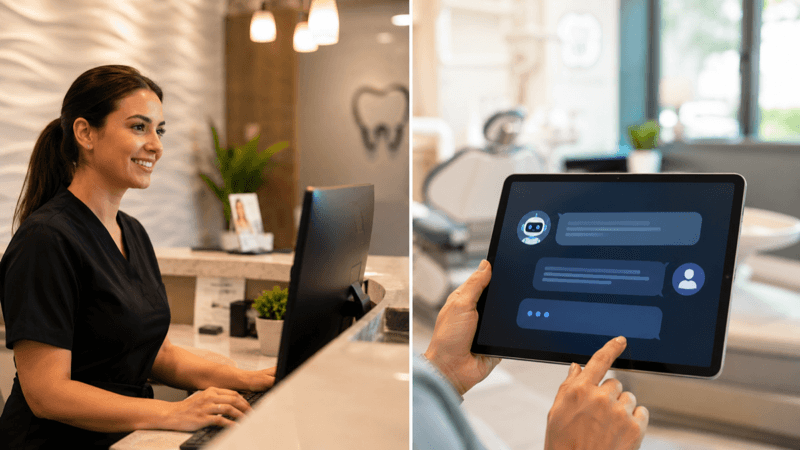
The AI vs. human receptionist debate in dentistry isn't really about replacement — it's about finding the right balance. Both have clear strengths, and the smartest dental practices use them together to maximize production and patient satisfaction.
Where AI Excels in Dental
AI handles high-volume routine tasks flawlessly: answering after-hours calls, scheduling new patient exams, confirming hygiene recalls, sending appointment reminders, capturing insurance information, and responding to "do you accept my plan?" questions. It does this 24/7 without fatigue, sick days, or variation in quality.
- Answers every call on the first ring — no hold times, no voicemail
- Handles unlimited simultaneous conversations across phone, text, and web chat
- Integrates with Dentrix, Eaglesoft, and Open Dental for real-time scheduling
- Pre-collects insurance information and flags verifications for your team
- Sends multi-channel appointment reminders and manages your ASAP list
- Works nights, weekends, and holidays without overtime pay
Where Humans Excel in Dental
Humans excel at empathy, complex problem-solving, and building personal relationships. When a patient is anxious about a procedure, confused about their treatment plan, or upset about a billing issue, a skilled front desk coordinator provides irreplaceable value. The warm greeting when a patient walks in, the reassuring tone when explaining a treatment estimate, the judgment call about when to interrupt the dentist — these are uniquely human skills.
Treatment Presentation Support
When a patient finishes a comprehensive exam and the treatment coordinator walks them through a $5,000 treatment plan, that conversation requires reading body language, adjusting the financing pitch based on the patient's reactions, and building the trust that turns a case presentation into accepted treatment. AI doesn't do this. A great treatment coordinator does.
The Hybrid Model: Best of Both Worlds
The most effective approach uses AI for the 80% of interactions that are routine — scheduling, reminders, recall, insurance questions, and after-hours coverage — while freeing your front desk to focus on the 20% that drive real production: patient check-in experience, treatment plan presentations, financial arrangements, and complex scheduling coordination.
Dental practices running a hybrid AI + human front desk model report 25–35% higher case acceptance rates — not because AI sells treatment, but because the front desk coordinator finally has time to focus on it.
The question isn't whether AI or humans are better. It's whether your current front desk setup lets your people do what they're best at — or buries them in phone calls, reminder texts, and insurance verifications that a machine handles better anyway.